📚 Practice the Most Important Lucent GK Questions for Upcoming Assam Competitive Exams
Are you preparing for Assam ADRE, Assam Police, or Gauhati High Court JAA Exam? Here’s Part 2 of our Lucent GK MCQs series — a handpicked collection of important General Knowledge questions from the Lucent GK book, designed to help you boost your preparation and score higher in the exam.
This set covers History, Geography, Polity, Economy, and General Science, which are commonly asked in most Assam government exams.
Lucent GK MCQs Part 2: Essential Questions for Assam ADRE, Assam Police, & GHC JAA Exams
Master Indian General Knowledge with 50 Hand-Picked MCQs Critical for Your Success in Upcoming Assam Competitive Examinations.
Are you aspiring for a career in Assam’s public sector? Whether you’re targeting the Assam ADRE, Assam Police, or the Gauhati High Court JAA Exam, a strong grasp of General Knowledge (GK) is non-negotiable. Lucent’s GK is often considered the bible for competitive exams, and mastering its content is key to scoring high. This article presents the second part of our curated series, offering 50 essential Multiple Choice Questions (MCQs) designed to test and enhance your knowledge across vital subjects.
Why Lucent GK is Crucial for Assam Competitive Exams
Competitive examinations in Assam, like many across India, place significant emphasis on General Knowledge. From historical facts to geographical features, constitutional provisions, economic indicators, and scientific principles, GK covers a vast syllabus. Lucent’s General Knowledge book is renowned for its concise yet comprehensive coverage, making it an indispensable resource. Our MCQs are designed to reflect the type of questions you can expect, helping you to evaluate your preparation.
Comprehensive Coverage
This set of 50 questions spans diverse categories: Indian History, Indian Geography, Indian Polity, Indian Economy, and General Science. This ensures a balanced preparation for all sections of your exam’s GK paper.
Exam Relevance
Each question is selected for its relevance to common competitive exam patterns, particularly those for state-level recruitment like Assam ADRE, Assam Police, and Gauhati High Court JAA. Practicing these will familiarize you with the format and depth required.
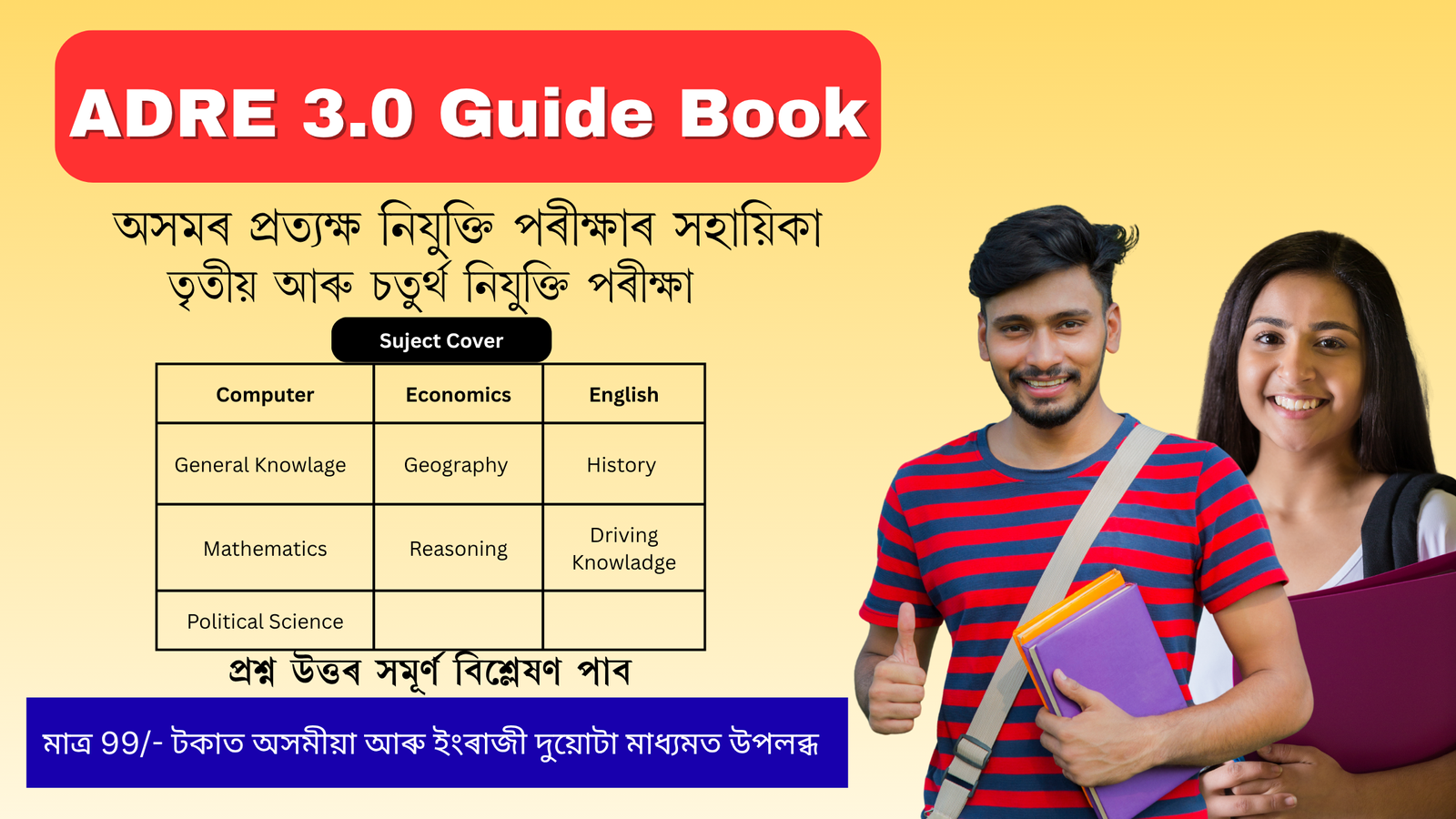
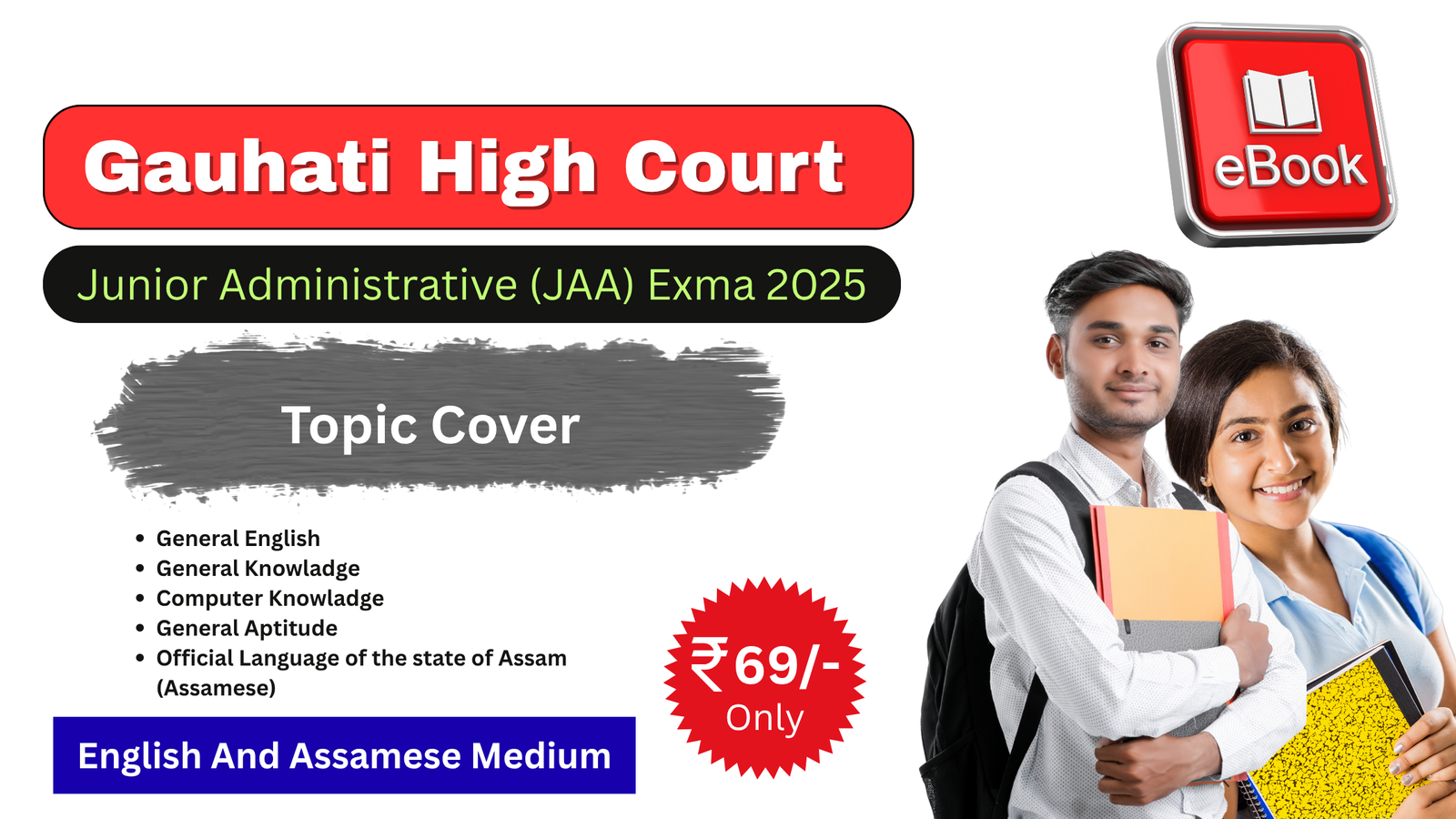
Dive into Indian History MCQs (Part 2)
1. Which ancient Indian physician is known as the “Father of Indian Medicine”?
2. The famous rock-cut caves of Elephanta are primarily dedicated to which deity?
3. Who was the founder of the Satavahana dynasty?
4. The famous traveler Ibn Battuta visited India during the reign of which Sultan of Delhi?
5. Which Mughal emperor built the Shalimar Bagh in Kashmir?
6. The Permanent Settlement of land revenue was introduced in 1793 by:
7. Who started the newspaper ‘Kesari’ during the freedom struggle?
8. The Chauri Chaura incident, which led Mahatma Gandhi to call off the Non-Cooperation Movement, occurred in which year?
9. Who was the last Mughal emperor of India?
10. The Battle of Buxar was fought in which year?
11. The highest dam in India is:
12. Which of the following states is known as the “Spice Garden of India”?
13. The largest freshwater lake in India is:
14. The Indian Standard Meridian passes through which of the following cities?
15. Which of the following is an active volcano in India?
16. The Rourkela Steel Plant was set up with the collaboration of:
17. The famous ‘Valley of Flowers’ National Park is located in which state?
18. Which river is known as the “Sorrow of Bihar”?
19. The Tropic of Cancer does NOT pass through which of the following Indian states?
20. The oldest oil field in India is:
21. The maximum strength of the Lok Sabha is fixed at:
22. Who is known as the “Father of the Indian Constitution”?
23. Which Article of the Indian Constitution deals with the Right to Constitutional Remedies?
24. The President of India can be removed from office by the process of impeachment mentioned in which Article?
25. The concept of Fundamental Duties was added to the Indian Constitution by which amendment?
26. The minimum age required to become a member of the Rajya Sabha is:
27. Who is the ex-officio Chairman of the Rajya Sabha?
28. The Finance Commission is constituted by the President of India every:
29. Which schedule of the Indian Constitution deals with the division of powers between the Union and States?
30. The Chief Justice of a High Court is appointed by the:
31. The term ‘Hindu rate of growth’ is associated with:
32. What is the base year for calculating India’s GDP (Gross Domestic Product) in the current series?
33. Which of the following is NOT a direct tax?
34. The Reserve Bank of India (RBI) was established in which year?
35. “SEBI” is concerned with:
36. Green Revolution in India was primarily associated with the increase in production of:
37. Which of the following is responsible for estimating the National Income in India?
38. The Narasimham Committee (1991) was constituted for reforms in:
39. The Mahatma Gandhi National Rural Employment Guarantee Act (MGNREGA) guarantees how many days of wage employment in a financial year to a rural household?
40. What is the full form of MSME?
41. Which of the following is responsible for the red colour of Mars?
42. The SI unit of electric current is:
43. Which gas is commonly known as “laughing gas”?
44. Deficiency of which vitamin causes scurvy?
45. The powerhouse of the cell is:
46. What is the approximate speed of sound in air at normal temperature and pressure?
47. Which element is used in the manufacturing of solar cells?
48. The study of insects is called:
49. Which of the following metals is the best conductor of electricity?
50. The pH value of pure water is:
🏁 Why Lucent GK is Important for Assam Exams
Lucent GK is one of the most trusted books for competitive exams in India. The questions are concise, factual, and directly relevant to exams like:
- Assam Direct Recruitment (ADRE)
- Assam Police Constable/SI Exam
- Gauhati High Court JAA Exam
- APSC, SSC, and Other State Government Exams
Practicing these MCQs regularly will strengthen your general knowledge foundation and help you answer static GK questions confidently.
📅 Upcoming Lucent GK MCQ Series
👉 Part 3 Coming Soon:
“Lucent GK MCQs on Indian Constitution and Geography” – specially curated for Assam ADRE & JAA aspirants.
Stay tuned on AllJobAssam.com for the next update.
🧩 Tips for Lucent GK & Assam Government Exam Preparation
Preparing for competitive exams like Assam ADRE, Assam Police, or Gauhati High Court JAA requires a smart study plan, not just hard work. Follow these expert tips to strengthen your Lucent GK preparation and overall exam performance.
🔹 1. Read Lucent GK Daily
- Cover 2–3 topics daily from Lucent’s General Knowledge book.
- Revise previously read chapters regularly to retain facts.
- Focus more on Static GK — History, Polity, Geography, and General Science.
🔹 2. Make Short Notes
- Create your own one-liner notes from Lucent GK.
- Highlight important dates, acts, and historical events.
- Keep a separate notebook for Assam-specific GK (state festivals, geography, districts, etc.).
🔹 3. Practice MCQs Regularly
- Attempt at least 30–50 MCQs daily.
- Revisit incorrect questions to identify weak areas.
- Practice mock tests based on previous year papers of ADRE and Assam Police.
🔹 4. Revise Weekly
- Allocate Sundays for revision only.
- Revise your Lucent GK notes and test papers to boost memory retention.
- Keep a monthly revision schedule before the final exam.
🔹 5. Focus on Assam GK
- Learn about Assam’s geography, rivers, culture, festivals, and current events.
- Read Assam government schemes, ministers’ lists, and local news daily.
- Combine Lucent GK + Assam GK PDF for maximum coverage.
🔹 6. Attempt Mock Tests & Quizzes
- Use free online quizzes and mock tests available on trusted websites like AllJobAssam.com.
- Simulate the actual exam environment to improve speed and accuracy.
🔹 7. Stay Updated with Current Affairs
- Read daily current affairs for at least 15–20 minutes.
- Follow monthly current affairs compilations from reliable sources.
- Focus on national + Assam state news, sports, awards, and government schemes.
🔹 8. Maintain Consistency & Motivation
- Study for at least 4–5 hours daily with small breaks.
- Stay away from distractions and stick to your timetable.
- Believe in your preparation and stay positive till the exam day.
✅ Bonus Tip: Combine Smart Study with Revision
Remember, “Success in competitive exams depends 70% on revision and 30% on new learning.”
Keep revising Lucent GK MCQs from previous parts (Part 1 & 2) to master your GK foundation.
⚠️ Disclaimer
The information and questions provided in this article are meant solely for educational and exam preparation purposes. All the Lucent GK MCQs included here are collected and compiled from trusted study materials, including the Lucent General Knowledge Book and previous exam trends.
The information and questions provided here are meant for educational purposes only. The content is based on the Lucent General Knowledge book and standard exam patterns. AllJobAssam.com does not claim ownership of any copyrighted material from Lucent Publications.
AllJobAssam.com does not claim any official affiliation with the Assam Government, Gauhati High Court, or any recruitment authority.
Candidates are advised to refer to the official notifications, syllabus, and guidelines before appearing in any examination.
While every effort has been made to ensure the accuracy of the content, AllJobAssam.com shall not be held responsible for any inadvertent errors or changes in official exam patterns.